Qronon

Research

Peer-reviewed work translated into product credibility.

Qronon's research highlights the translation of cutting-edge quantum-enhanced machine learning into practical forecasting solutions.

Publications

What the papers show, and why it matters.

Conference abstract

Quantum-inspired machine learning for efficient and reliable weather forecasting

EGU General Assembly 2026, Vienna, Austria · 3-8 May 2026 · EGU26-21434

Summary: Presents Qronon's quantum-inspired machine learning direction for efficient and reliable weather forecasting to the EGU research community.

What this enables: Connects the QRC research programme directly to applied weather forecasting, validation and partner-facing technical discussion.

DOI: 10.5194/egusphere-egu26-21434
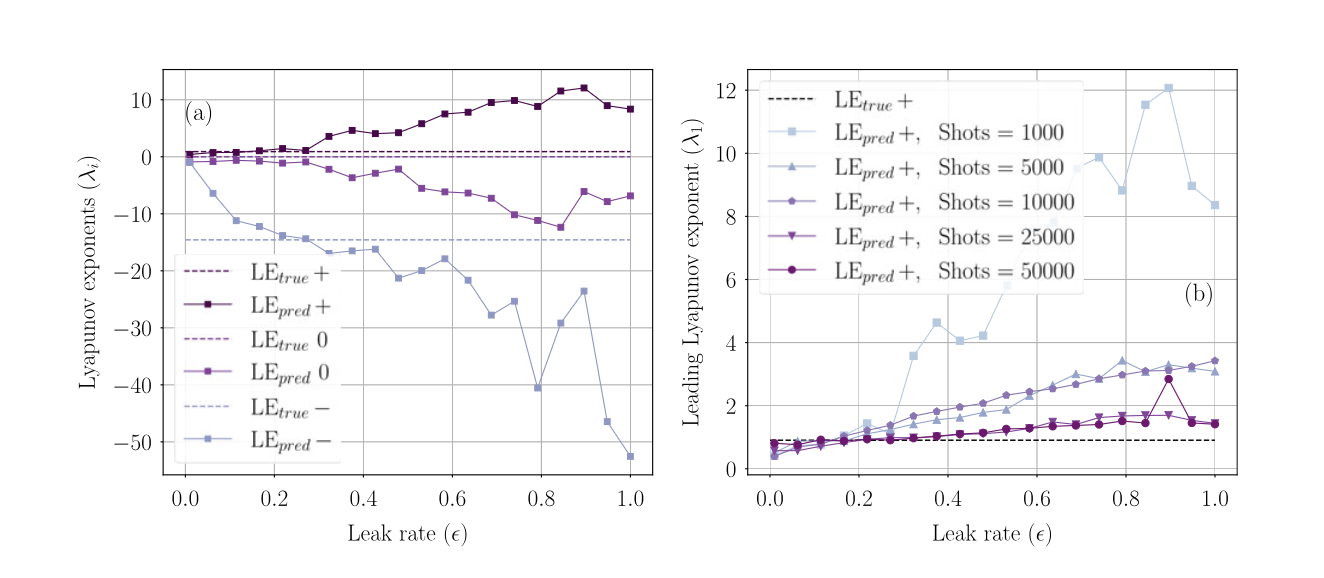
Robust quantum reservoir computers for forecasting chaotic dynamics: generalized synchronization and stability

Proceedings of the Royal Society A · Published: 29 October 2025

Summary: Shows how stability and synchronization principles can make QRC systems more reliable for chaotic dynamics.

What this enables: A stronger foundation for forecast engines that need stable rollouts and usable uncertainty.

DOI: 10.1098/rspa.2025.0550

Optimal training of finitely sampled quantum reservoir computers for forecasting of chaotic dynamics

Quantum Machine Intelligence (2025) 7:31 · Published: 27 February 2025

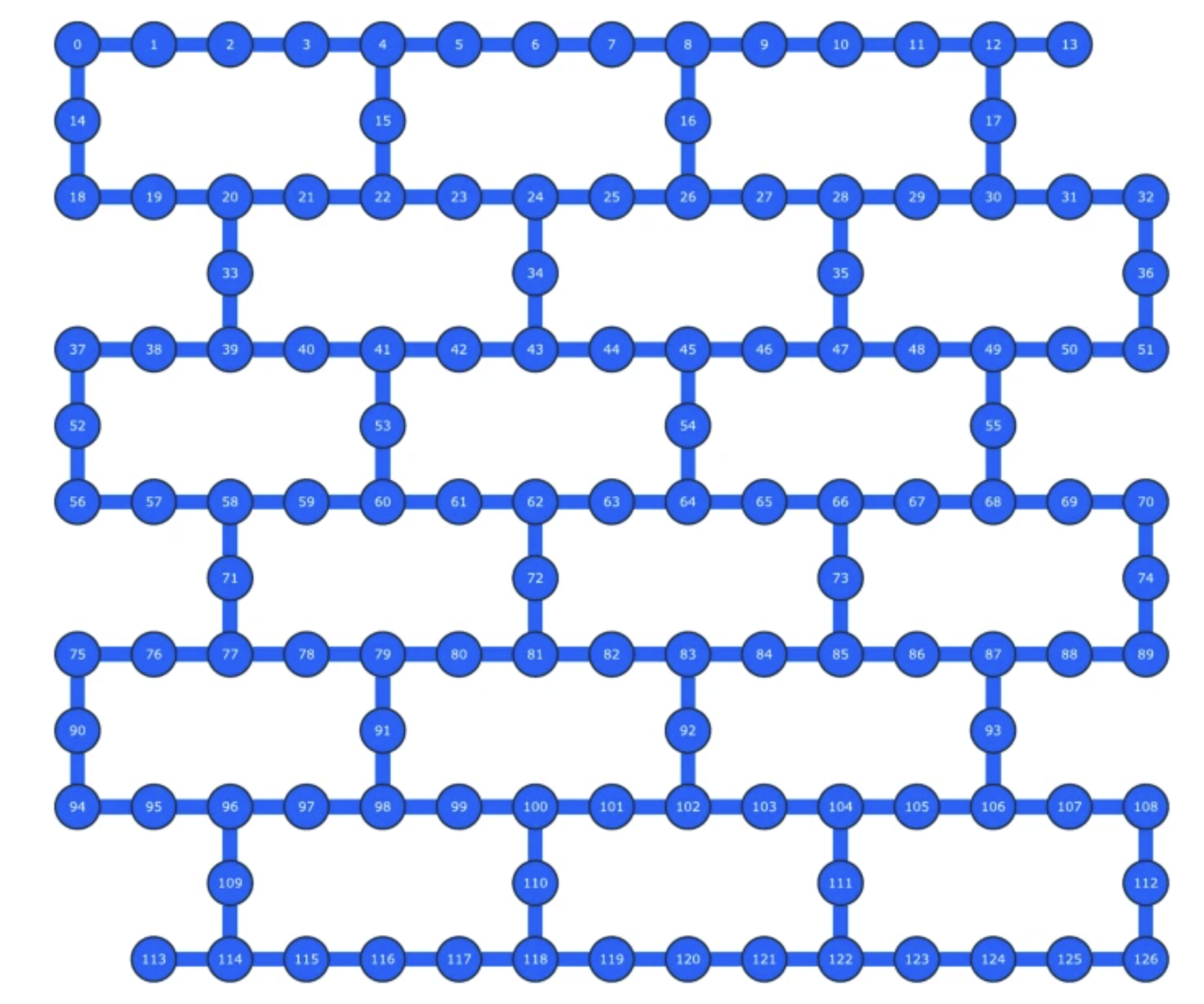
Summary: Explores training QRC systems when measurements are finite and noisy rather than idealized.

What this enables: Practical training methods for real-world systems where data and compute budgets are constrained.

DOI: 10.1007/s42484-025-00261-9

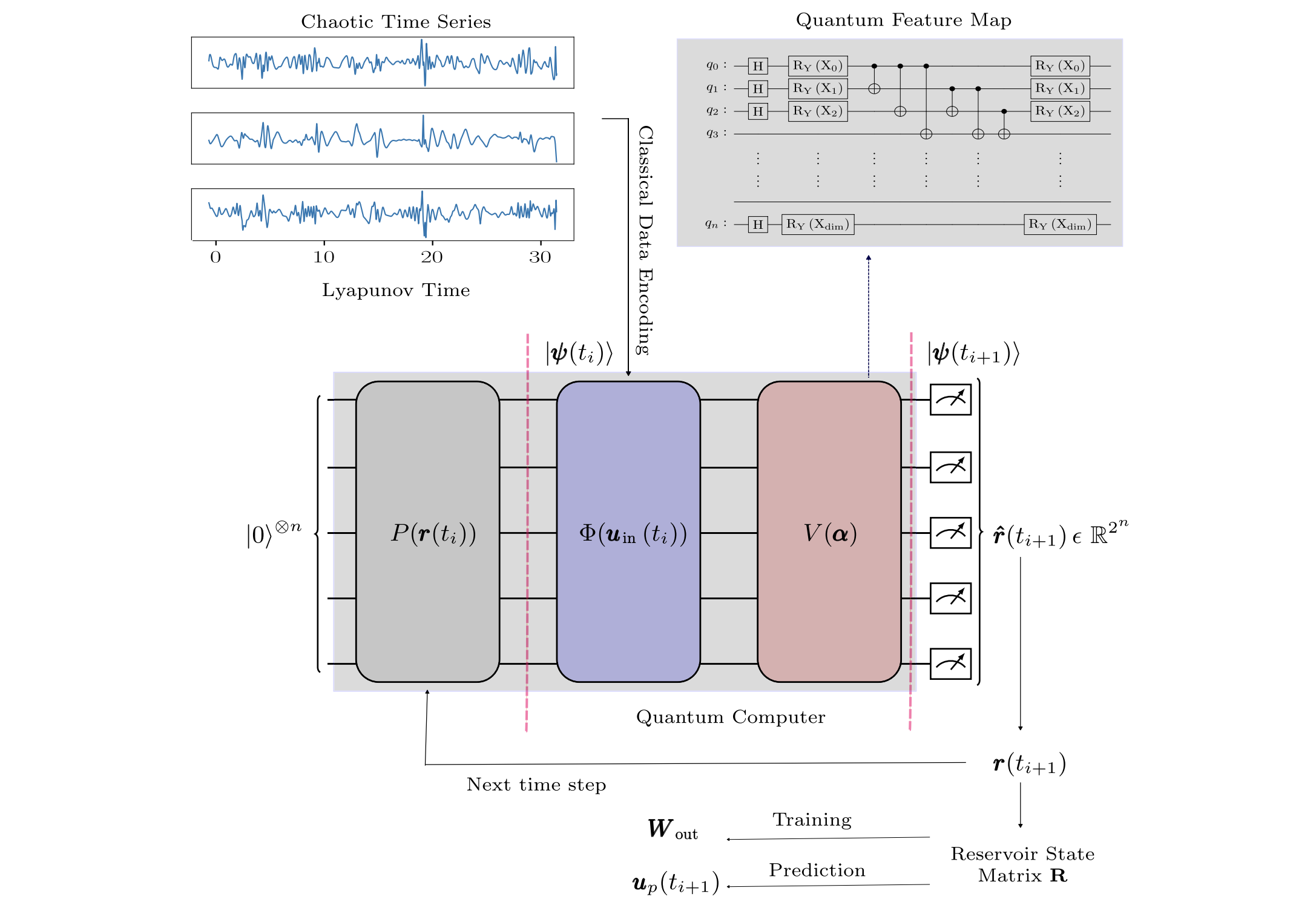
Prediction of chaotic dynamics and extreme events: A recurrence-free quantum reservoir computing approach

Physical Review Research 6, 043082 · Published: 1 November 2024

Summary: Demonstrates a QRC approach for chaotic dynamics and rare or extreme events without recurrent feedback loops.

What this enables: Applied pathways for earlier signals in systems where extremes matter more than average behavior.

DOI: 10.1103/PhysRevResearch.6.043082